
Metro advertising is a form of transit media that enables businesses to communicate with commuters through advertising spaces across metro stations, trains, platforms, and other approved transport facilities. As urban rail networks continue to develop across international markets, they offer brands opportunities to reach diverse audiences in environments associated with daily travel.
People use metro systems for commuting, education, shopping, business meetings, tourism, and leisure activities. This regular movement creates multiple opportunities for brand exposure throughout the passenger journey. For advertisers, metro environments provide a combination of location-based visibility, repeated impressions, and several creative display options.
What Makes Metro Advertising Different?
Metro advertising operates within a structured transportation environment where passengers interact with different spaces during their journey. Advertisements can be positioned at station entrances, ticketing areas, corridors, platforms, train interiors, and other approved locations.
This variety allows businesses to choose how and where they communicate with their audience. A station display may attract attention before passengers board, while an interior advertisement can reach commuters during their journey.
Metro advertising also offers opportunities for campaigns that require consistent visibility over an agreed period. The same creative message can appear across selected stations or train services, depending on the available inventory and campaign arrangement.
Key Types of Metro Advertising
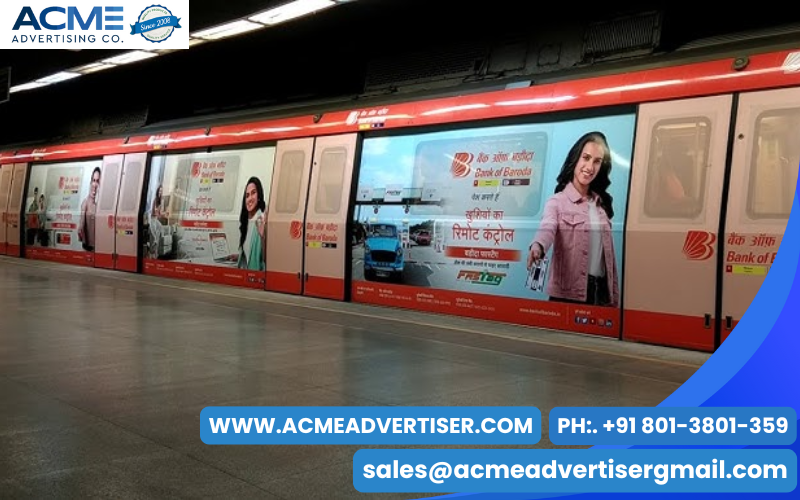
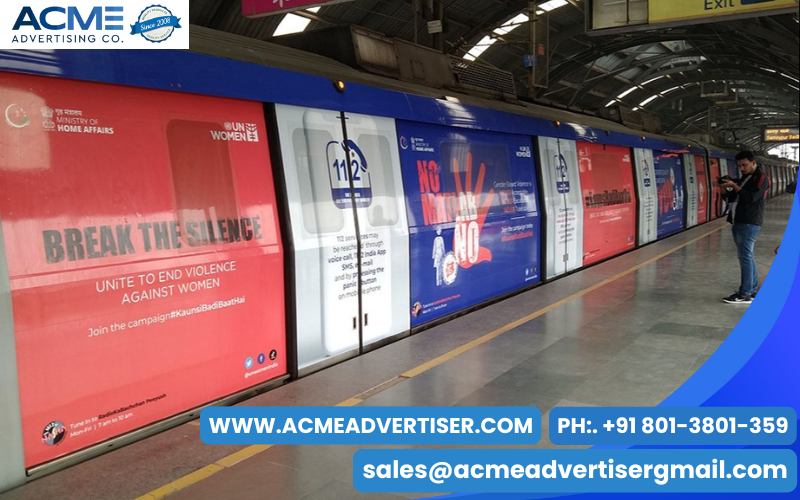
Train Wraps and Exterior Branding: Train branding uses approved exterior surfaces to display large-scale campaign designs. It can create a distinctive visual presence across routes where the branded trains operate.
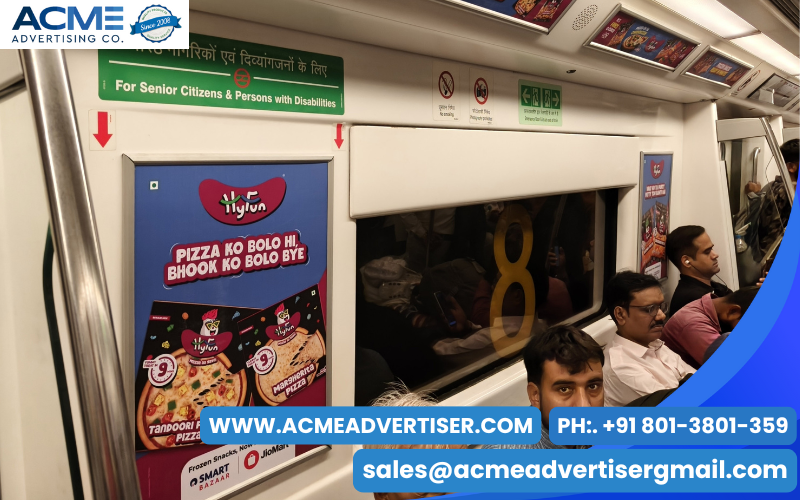
Interior Coach Advertising: Advertising panels inside metro coaches allow brands to communicate with passengers during their journey. These placements can be used for product information, promotional messages, and brand awareness.
Station Advertising: Station advertising includes displays across approved entrances, corridors, concourses, and other passenger areas. The available formats may include posters, wall panels, illuminated displays, and customised installations.
Platform Advertising:Platform displays reach commuters while they wait for trains. Their effectiveness depends on positioning, passenger movement, visibility, and the amount of time people spend in the area.
Digital Screen Advertising: Digital screens can display static creatives, motion graphics, and short promotional videos. Depending on the network’s media arrangements, multiple advertisements may rotate according to a scheduled advertising programme.
Full Station Branding: Some metro networks offer opportunities to combine several approved advertising surfaces within a station. This can help a brand create a coordinated campaign environment instead of relying on a single display.
Why Brands Invest in Metro Advertising
Metro systems connect important residential, commercial, and institutional areas. This makes them relevant for businesses that want to reach people across different parts of a city.
Repeated commuter journeys can increase the likelihood of passengers encountering the same brand message over time. A campaign placed along a relevant route may also reach different audience groups throughout the day.
Metro advertising can support several objectives, including brand awareness, product launches, service promotion, event announcements, and public information campaigns. Its suitability depends on the relationship between the advertised offering and the people using the selected transport network.
Selecting Metro Advertising Locations
Choosing the right advertising location requires more than identifying a station with high passenger numbers. Businesses should consider the audience profile, nearby destinations, route connections, passenger movement, and campaign objectives.
Stations serving business districts may be suitable for professional services and corporate brands. Locations near shopping centres can support retail and lifestyle promotions, while stations connected to universities or educational districts may be relevant for education providers.
Interchange stations can provide access to passengers travelling between different routes. However, the best placement depends on the campaign’s intended audience and the advertising surfaces available at that location.
Industries That Can Benefit from Metro Advertising
Metro advertising can serve businesses across a wide range of industries.
- Retail and fashion: Promoting collections, new stores, seasonal offers, and brand campaigns.
- Automotive: Introducing new vehicles, highlighting features, and strengthening brand awareness.
- Real estate: Promoting residential projects, commercial properties, and development launches.
- Technology and electronics: Communicating product launches, services, and new features.
- Education: Promoting admissions, courses, training programmes, and educational events.
- Travel and hospitality: Highlighting destinations, hotels, attractions, and travel-related services.
- Consumer goods: Improving product familiarity through repeated visual exposure.
The creative approach should reflect the audience’s needs and the advertising environment rather than using the same message for every placement.
Creating Effective Metro Advertising Designs
Metro advertisements need to communicate clearly in environments where people are often moving between locations. A design that works on a large station wall may require adjustments when used inside a train coach or on a digital screen.
Strong visual hierarchy is essential. The brand name, main message, and key visual should be easy to identify without requiring passengers to spend too much time reading. Clear typography and suitable colour contrast can improve visibility across different lighting conditions.
Digital formats may allow motion and changing content, but animation should support the message rather than distract from it. Static formats benefit from simple layouts, prominent visuals, and carefully selected text.
Consistent branding across different placements can make a campaign more recognisable throughout the passenger journey.
Static Versus Digital Metro Advertising
Static metro advertising uses printed or fixed creative materials displayed for a specified period. It is suitable for campaigns with a consistent message, such as product awareness, service promotion, or event announcements.
Digital metro advertising uses electronic screens to display content that can be scheduled or updated according to the advertising arrangement. It may support multiple creatives, time-based messaging, and short video advertisements.
The choice between these formats depends on the campaign objective, available inventory, production requirements, and budget. Businesses should also check the technical specifications and content policies applicable to the selected metro network.
Understanding Metro Advertising Costs
Metro advertising costs vary across markets and transport networks. Pricing may depend on the city, station category, passenger movement, route, display size, media format, campaign duration, and number of advertising locations.
Production and operational expenses can also influence the total budget. Train branding and customised station installations may require additional fabrication and installation work, while digital advertising may involve screen scheduling and creative adaptation.
Businesses should request a clear breakdown of media charges, production costs, installation, maintenance, campaign dates, and any additional fees. Comparing options with the same campaign duration and advertising scope provides a more useful basis for decision-making.
Advertising Permissions and Compliance
Metro advertising is managed under the rules and commercial arrangements of the relevant transport authority or authorised media operator. These requirements may cover approved advertising surfaces, structural safety, creative content, materials, dimensions, display schedules, and installation procedures.
Advertising must not interfere with passenger movement, emergency routes, safety instructions, or transport operations. Certain placements may require additional technical checks or approvals before installation.
Since requirements differ between cities and countries, advertisers should verify the applicable conditions for every selected network rather than assuming that approval in one market automatically applies elsewhere.
Combining Metro Advertising with Other Media Channels
Metro advertising can work alongside digital campaigns, social media, search marketing, television, and other outdoor media formats. A coordinated campaign allows brands to maintain a consistent message while reaching audiences in different environments.
For example, a company launching a product can introduce the campaign through digital channels and reinforce its visibility through metro station displays. Consistent visual elements can help passengers recognise the brand when they encounter the campaign again online.
Where permitted, QR codes and other response mechanisms can connect physical advertising with digital information. Their placement should be appropriate for passenger safety and the viewing conditions of the selected format.
Evaluating Metro Advertising Campaigns
The performance of a metro advertising campaign should be measured against its original marketing objective. Brand awareness activities may use branded search trends, website traffic, audience surveys, and changes in brand recognition as supporting indicators.
Promotional campaigns can monitor enquiries, product interest, store visits, and sales trends during the advertising period. Businesses may also compare different station locations, creative formats, and campaign durations to identify useful patterns.
A structured approach to planning and evaluation helps brands understand how metro advertising contributes to their wider marketing activities and supports better decisions for future campaigns.
Frequently Asked Questions (FAQs):
1. How can I choose the right metro advertising format for my brand campaign?
Select a format based on your campaign objective, target commuters, preferred metro network, and available advertising locations. Options may include train branding, platform panels, station branding, digital screens, and interior train advertisements, depending on the city.
2. Can I book metro train branding for a product launch in India?
Yes, you can enquire about full or partial train branding for product launches, promotional campaigns, and large-scale brand awareness activities. Share your target city, preferred campaign dates, and branding requirements to check available train inventory.
3. Which metro advertising options provide visibility inside stations and trains?
You can explore platform panels, concourse branding, pillar advertisements, digital screens, train interior panels, and train exterior wraps. The available formats depend on the metro network and its advertising policies.
4. Can I combine station branding and train advertising in one campaign?
Yes, combining station-based placements with train advertisements can help maintain consistent brand messaging across different commuter touchpoints. Request a customized media plan covering your preferred stations, train formats, campaign duration, and available inventory.
5. What information is required to get a quotation for metro advertising?
Provide your preferred city, advertising format, station or route preferences, campaign duration, number of placements, and creative requirements. Ask for an itemized quotation covering media charges, production, installation, permissions, and applicable additional costs.
6. Can I run customized metro advertising campaigns for multiple brands or products?
Yes, multiple creatives can be planned for different products, services, or campaign messages, subject to the selected format and advertising guidelines. Discuss artwork specifications, placement allocation, and production requirements before confirming the campaign.
7. How far in advance should I book metro advertising space in India?
It is advisable to enquire well before your campaign launch, especially when you need premium stations, train branding, or multiple locations. Booking timelines depend on inventory availability, artwork approval, production, and installation requirements.
8. Will I receive proof after my metro advertising campaign is installed?
You can request installation photographs and site-wise confirmation from your advertising provider. Before booking, clarify what proof of display will be provided, when it will be shared, and how maintenance or damaged creatives will be handled during the campaign.
Website: www.acmeadvertiser.io
LinkedIn: Acme Advertising Co