

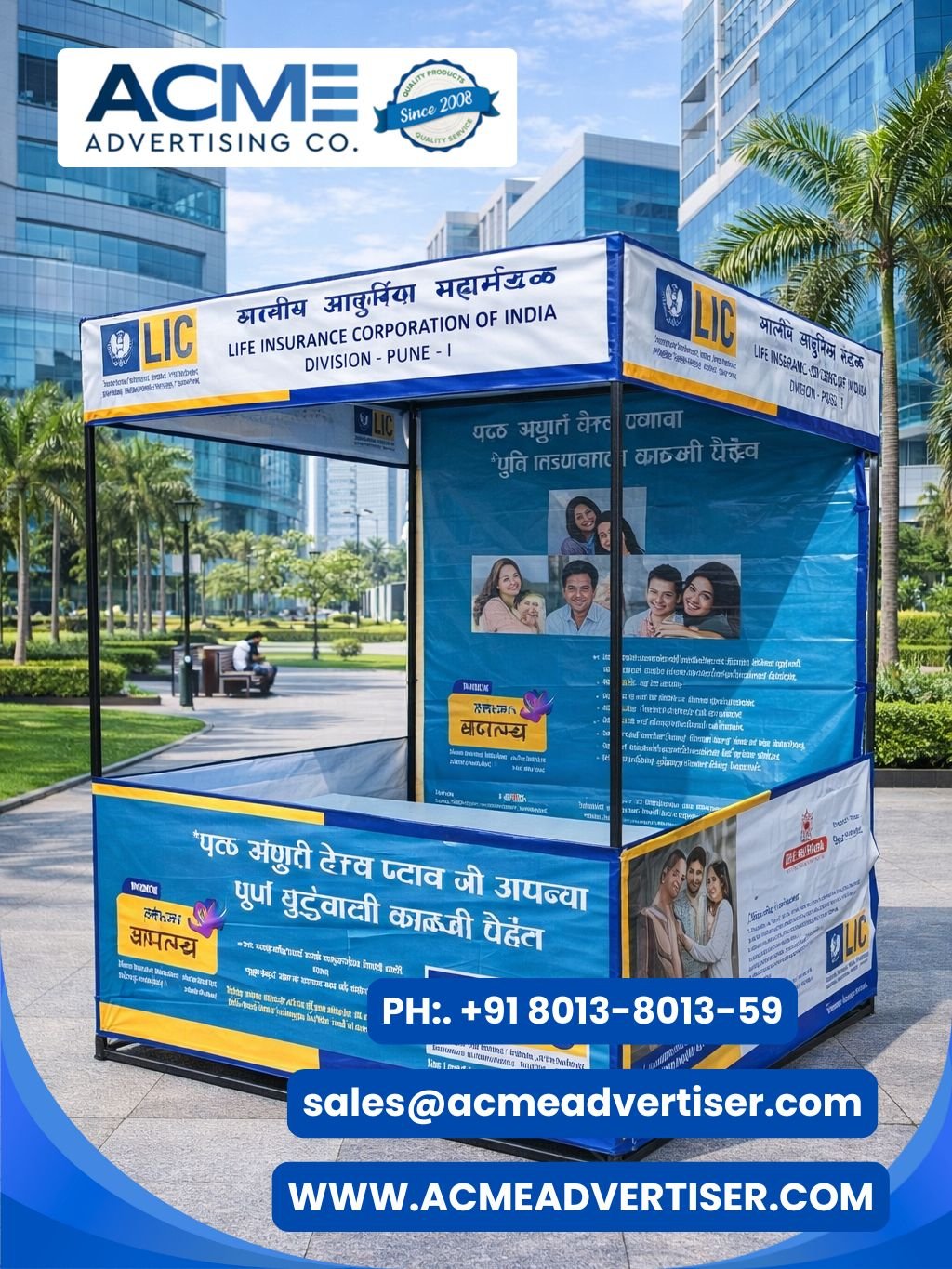
In physical environments, effective advertising is often the result of balance. Brands must remain visible without disrupting movement, engagement, or experience. Canopy advertising achieves this balance by combining utility with branding, allowing businesses to establish presence in outdoor and semi-outdoor spaces while offering shade, shelter, and structure.
Unlike high-impact formats designed for distance viewing, canopy ads operates at human scale. It interacts directly with audiences during moments of pause—at events, retail fronts, exhibitions, promotions, and public activations. This proximity makes canopy ads a valuable branding format that supports recognition, trust, and recall through consistent exposure.

The images featured are used for educational and informational purposes to demonstrate OOH and DOOH advertising concepts. No ownership or endorsement of any brand is implied.
Table of Contents
Understanding Canopy Advertising
Canopy advertising refers to branded canopy structures used in outdoor or transitional environments to display brand identity, messaging, or promotional information. These structures are commonly deployed where people gather, wait, interact, or move slowly, allowing branding to be noticed without competing aggressively for attention.
Canopy ads is widely used for:
- Outdoor brand activations and events
- Retail entrances and promotional zones
- Exhibitions, trade shows, and fairs
- Roadshows and mobile brand campaigns
- Public spaces requiring temporary branding
Because canopies are functional by design, branding placed on them feels purposeful rather than intrusive. This makes canopy advertising especially effective for experiential and engagement-led campaigns.
Why Canopy Advertising Influences Brand Perception
Brand perception often forms through repeated, real-world exposure rather than single high-impact impressions. Canopy ads contributes to this process by placing brand visuals within environments where people naturally interact.
Canopy advertising shapes perception by:
- Signaling presence and preparedness
- Associating the brand with comfort and organization
- Reinforcing identity through repeated visibility
A well-designed canopy suggests that a brand is active, accessible, and invested in the space it occupies. Over time, this physical consistency builds familiarity, which is a key driver of trust.
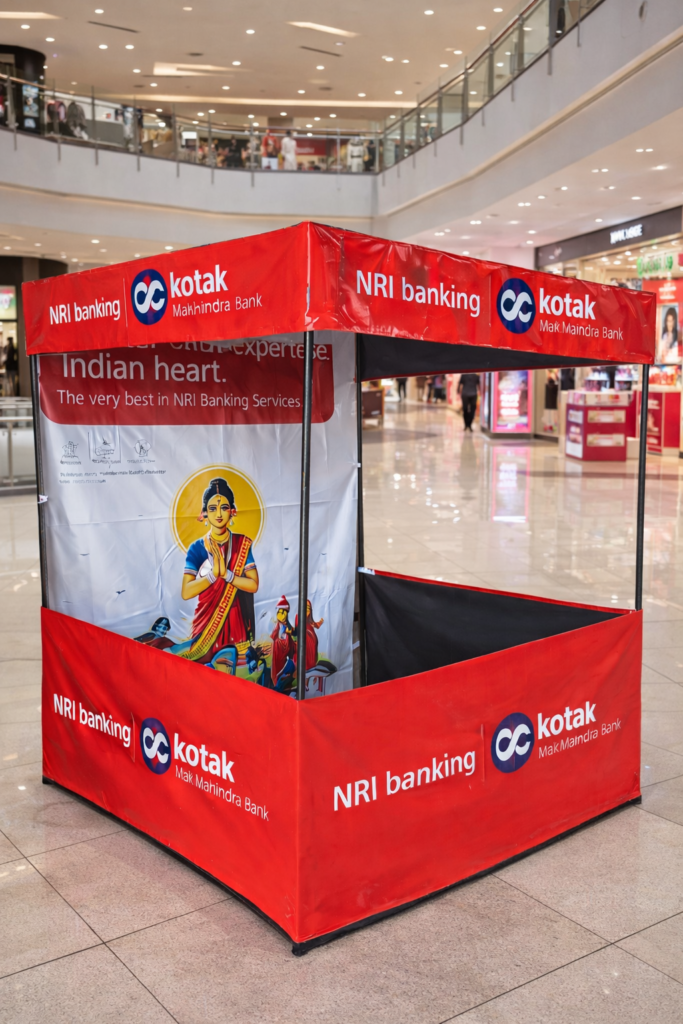
The images featured are used for educational and informational purposes to demonstrate OOH and DOOH advertising concepts. No ownership or endorsement of any brand is implied.
Visibility Without Disruption
One of the strongest advantages of canopy advertising is its non-intrusive nature. Unlike loud visual formats, canopies integrate seamlessly into the environment.
Effective canopy ads:
- Aligns with natural gathering points
- Enhances the space rather than dominating it
- Remains visible without demanding attention
Because people spend time near canopies—waiting, browsing, interacting—the branding benefits from longer dwell time. This passive exposure supports recall without overwhelming the audience.
Strategic Placement Determines Effectiveness
The impact of canopy ads depends heavily on where and how it is placed. A canopy positioned in the wrong location becomes invisible, regardless of design quality.
Strategic placement considers:
- Footfall density and movement patterns
- Entry and exit points
- Event flow and activity zones
- Visibility from multiple angles
Canopy advertising performs best when placed where people naturally stop or slow down. In such locations, the canopy becomes a visual anchor that frames the brand within the experience.
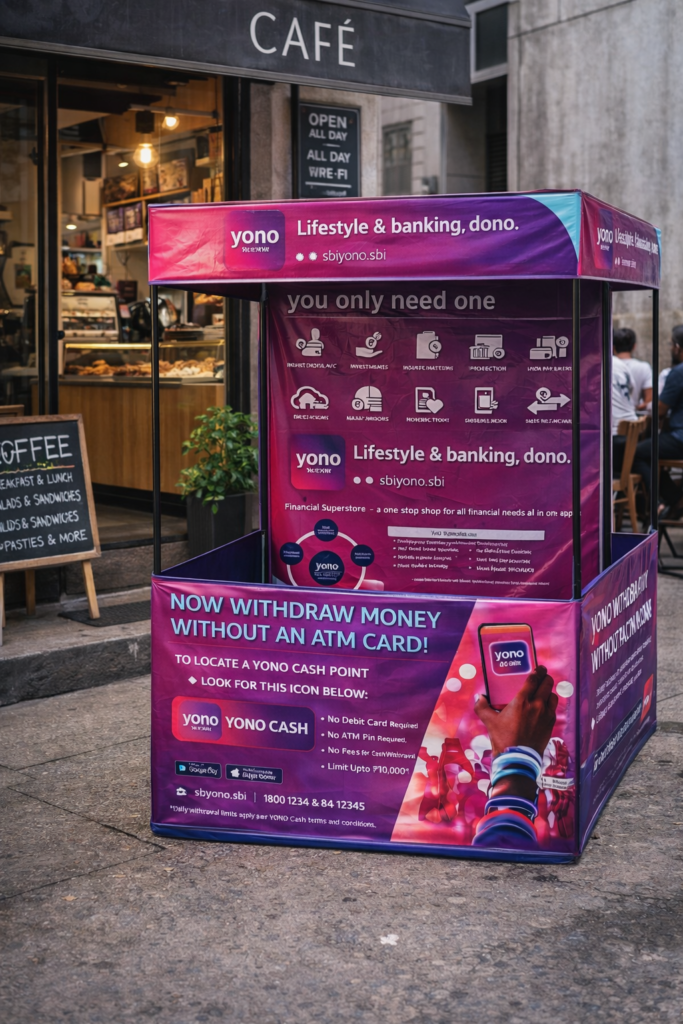
The images featured are used for educational and informational purposes to demonstrate OOH and DOOH advertising concepts. No ownership or endorsement of any brand is implied.
Creative Simplicity in Canopy Advertising
Canopies are typically viewed from close range, often while people are engaged in other activities. For this reason, messaging must be clear and immediate.
High-performing canopy ads usually features:
- Minimal text with a single core message
- Strong brand colors and logos
- Clean layouts with high contrast
Overloading a canopy with information reduces readability. Creative simplicity ensures that branding is absorbed quickly and remembered easily.
Building Trust Through Physical Presence
Physical branding communicates commitment. A branded canopy shows that a business has invested time and resources into engaging its audience in person.
Canopy ads builds trust by:
- Appearing intentional and well-structured
- Operating within regulated event or public spaces
- Maintaining consistent quality and finish
This physical presence reassures audiences, particularly in promotional environments where credibility matters. A well-maintained canopy reflects positively on the brand it represents.

The images featured are used for educational and informational purposes to demonstrate OOH and DOOH advertising concepts. No ownership or endorsement of any brand is implied.
Cost Efficiency and Long-Term Value
Canopy ads offers strong value over time. Once produced, a canopy can be reused across multiple campaigns, locations, and events.
Key advantages include:
- Reusability across different activations
- Low maintenance requirements
- Long display lifespan
For brands that participate in frequent outdoor promotions, canopy ads becomes a cost-efficient asset rather than a one-time expense. Its value increases with consistent use.
Applications Across Industries
Canopy advertising adapts easily to different sectors because it supports both branding and functionality.
Industries that frequently use canopy ads include:
- Retail and consumer goods
- FMCG and product sampling
- Healthcare and wellness campaigns
- Automotive and mobility brands
- Corporate and institutional events
In each case, the canopy supports visibility while improving the overall experience of the space.

The images featured are used for educational and informational purposes to demonstrate OOH and DOOH advertising concepts. No ownership or endorsement of any brand is implied.
Supporting the Customer Journey
Canopy ads plays a role at multiple stages of the customer journey. It often serves as the first point of physical interaction between a brand and its audience.
It supports the journey by:
- Attracting attention from a distance
- Providing a clear branded point of engagement
- Reinforcing identity during interaction
This continuity helps move audiences from awareness to engagement in a natural, non-disruptive way.
Regulated Environments and Brand Credibility
Canopy ads is commonly used in regulated spaces such as exhibitions, malls, and public events. Compliance with size, placement, and safety guidelines ensures orderly environments.
Operating within these frameworks:
- Enhances brand professionalism
- Reduces visual clutter
- Improves public trust
Brands that respect these standards benefit from improved credibility and smoother campaign execution.
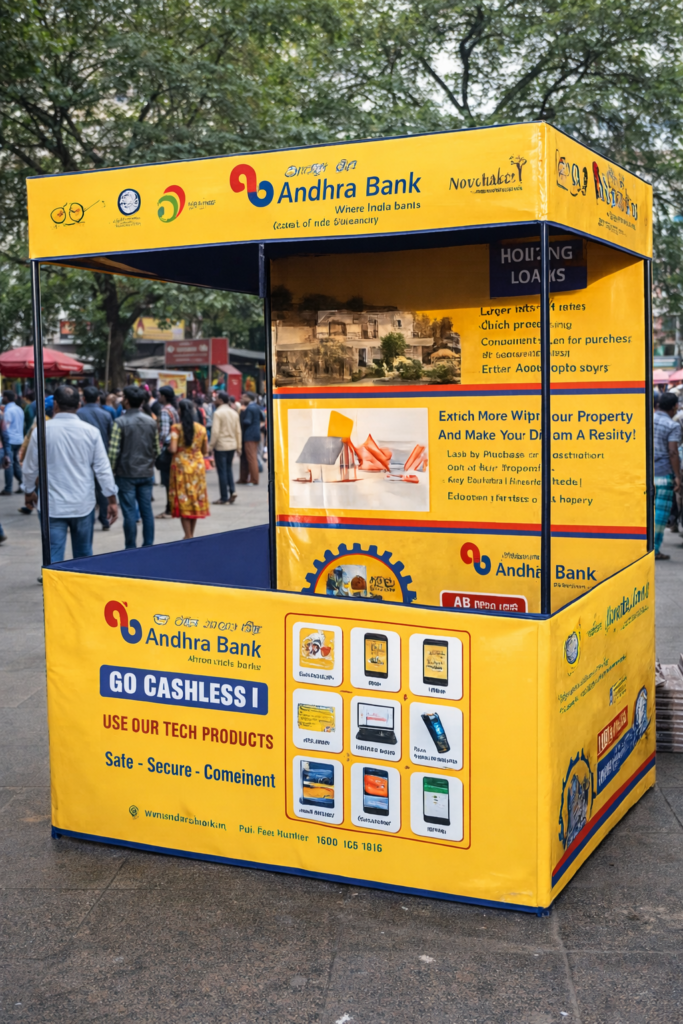
The images featured are used for educational and informational purposes to demonstrate OOH and DOOH advertising concepts. No ownership or endorsement of any brand is implied.
Measuring the Value of Canopy Advertising
The effectiveness of canopy ads is not measured through clicks or impressions alone. Its impact appears in real-world outcomes.
Common indicators include:
- Increased footfall at activation points
- Higher engagement during events
- Stronger brand recall after interaction
Because canopy ads supports prolonged exposure, its influence builds gradually rather than delivering short-lived spikes.
Long-Term Outcomes That Matter
When used consistently, canopy ads delivers outcomes beyond immediate promotion.
These outcomes include:
- Sustained brand visibility
- Improved audience familiarity
- Stronger presence in local markets
These long-term benefits explain why canopy advertising remains a core component of outdoor branding strategies.

The images featured are used for educational and informational purposes to demonstrate OOH and DOOH advertising concepts. No ownership or endorsement of any brand is implied.
Final Perspective on Canopy Advertising
Canopy ads works best when it feels natural and purposeful. It does not rely on scale or noise. Instead, it integrates branding into environments where people already gather, interact, and decide.
By focusing on placement strategy, creative clarity, and consistent execution, brands can use canopy ads to build visibility that lasts beyond individual campaigns.
Professional Canopy Advertising Execution
Successful canopy ads requires thoughtful planning, quality production, and disciplined execution. Acme Advertising Co. provides professional canopy ads solutions, supporting brands with design coordination, production, and on-ground execution across events and outdoor environments.
Their approach prioritizes durability, clarity, and long-term brand presence rather than short-term attention. Contact us today to explore how our canopy advertising services can help your brand.
Expand your network with us, let’s connect on LinkedIn