
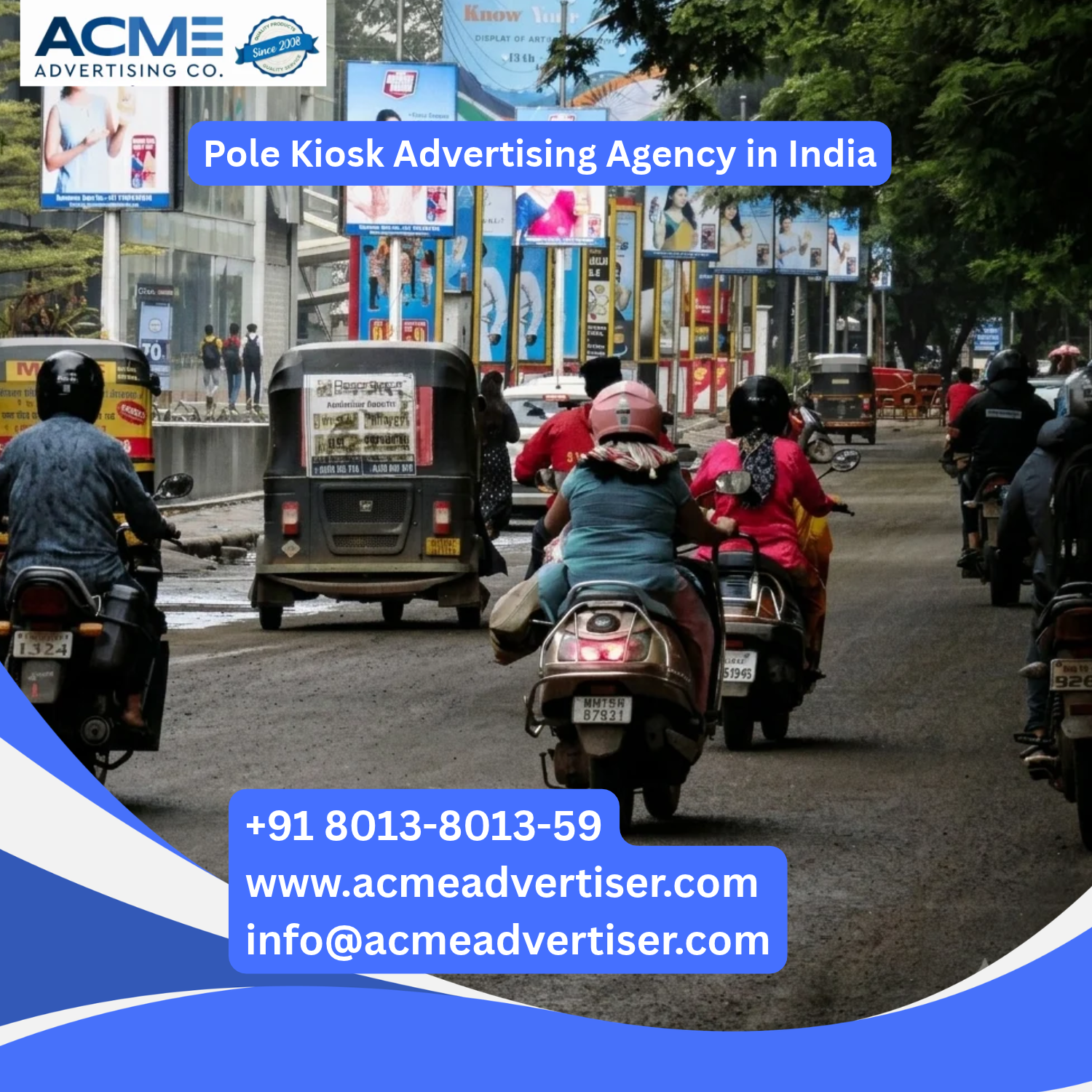
In a busy Indian city, people spend a considerable part of their day travelling between home, work, shopping areas, educational institutions, and entertainment destinations. During these daily journeys, they encounter countless visual messages, but only a few manage to capture their attention. This is where pole kiosk advertising can help brands build visibility in the places where everyday life happens.
From crowded commercial roads to busy market streets, pole kiosks offer businesses an opportunity to communicate with people as they move through their regular routines. When placed strategically, these advertisements can help brands improve recognition, promote new products, support local business expansion, and maintain a consistent presence in selected areas.
ACME Advertising Co. helps businesses plan and execute outdoor advertising campaigns based on their marketing objectives, target audiences, locations, and campaign requirements. With experience in outdoor media and retail branding across India, the company understands the importance of selecting suitable advertising formats and locations for different business needs.
For brands looking to reach people beyond digital screens, working with a reliable Pole Kiosk Advertising Agency in India can be a practical step towards building a stronger outdoor presence.
Why Pole Kiosk Advertising Is Relevant for Indian Markets
India has a diverse advertising landscape. A campaign designed for a metropolitan business district may require a different approach from one intended for a developing commercial town or a busy local marketplace.
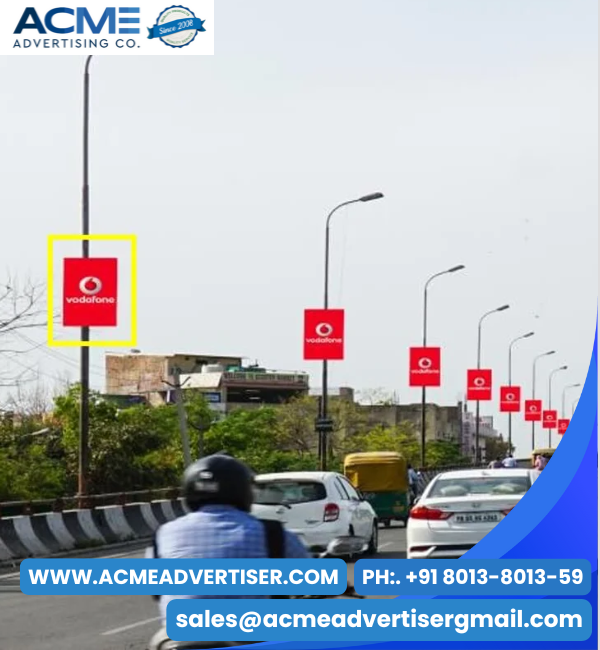
Pole kiosk advertising allows brands to establish visibility along selected roads, streets, commercial stretches, and other approved public locations. Depending on the available inventory and local permissions, advertisements can be positioned where pedestrians, commuters, shoppers, and motorists regularly pass.
For example, a retail brand opening a new store may want to attract people living or shopping nearby. A consumer goods company may want to improve product recognition across several neighbourhoods. A property developer may want to reach potential buyers travelling through a particular business district.
In each situation, location selection plays a major role in determining whether the advertisement reaches the intended audience.
Pole kiosks are particularly useful when the campaign requires repeated exposure within a defined geographical area. People who travel along the same route every day may encounter the advertisement multiple times, helping them become more familiar with the brand.
However, visibility alone does not guarantee sales. Campaign results depend on the relevance of the location, creative quality, campaign duration, audience profile, and the effectiveness of the overall marketing strategy. Pole Kiosk Advertising Agency in India.
How Pole Kiosk Advertising Helps Brands Build Everyday Recognition
Outdoor advertising often works through repeated exposure rather than a single interaction. A person may notice an advertisement while travelling to work, recognise it again while visiting a market, and later remember the brand when making a purchase.
This repeated visibility can be valuable for businesses that want to strengthen brand recall.
Pole kiosk advertisements can support several marketing objectives:
Building awareness for a new brand or product.
Promoting store openings and local retail offers.
Supporting regional product launches.
Improving brand recognition across selected neighbourhoods.
Communicating seasonal campaigns and promotional messages.
Reinforcing the visibility of brands already using digital, print, or television advertising.
Supporting expansion into new cities and commercial markets.
The most effective campaigns begin with a clear objective. A company seeking brand awareness may prioritise high-visibility locations, while a retailer looking for store visits may focus on roads and junctions near its outlet.
A Pole Kiosk Advertising Agency in India should therefore consider more than the number of available advertising structures. The real priority is identifying placements that support the campaign’s intended outcome.
Which Locations Are Best for Pole Kiosk Advertising in India?

The performance of a pole kiosk campaign depends heavily on where the advertisements are installed. A busy location is not automatically the right location for every brand. The audience travelling through that area must also be relevant to the advertised product or service.
The following locations can be considered when planning a campaign, subject to available advertising inventory and applicable permissions.
Busy Commercial Roads and Major Junctions: Commercial roads and major junctions often connect residential areas, office districts, shopping destinations, and transport routes. These locations can provide opportunities to reach people travelling for different reasons throughout the day.
Brands targeting a broad urban audience may consider selected stretches with consistent traffic movement and good advertisement visibility.
Before selecting a junction, advertisers should assess whether the kiosk can be seen clearly, whether surrounding structures obstruct the advertisement, and whether traffic conditions allow people to notice it safely.
Shopping Markets and Retail Streets: Local markets are important destinations for shoppers looking for clothing, electronics, groceries, home products, jewellery, and everyday essentials.
Pole kiosk advertising near suitable shopping areas can help retailers introduce new collections, communicate seasonal offers, and increase awareness of nearby stores.
For example, a fashion brand planning a festive campaign may benefit from placements around relevant shopping districts. A consumer electronics retailer may prefer locations connecting residential neighbourhoods with major retail destinations.
The advertising message should match the area’s shopping audience rather than relying on general visibility alone.
Office Districts and Business Hubs: Office districts attract employees, business owners, professionals, and visitors. These areas can be relevant for brands promoting financial services, technology products, food outlets, professional services, and lifestyle offerings.
Morning and evening commuting periods may provide useful exposure opportunities, depending on local movement patterns.
Advertisers should consider the working population, nearby commercial establishments, weekday traffic, and the distance between the selected locations and the target audience.
Residential Neighbourhoods and Connecting Roads: Residential areas provide opportunities for brands seeking repeated exposure among local communities.
Advertisements along suitable connecting roads may help promote supermarkets, educational institutions, healthcare services, restaurants, home improvement products, and neighbourhood retail outlets.
A campaign covering several relevant residential pockets can be more useful than concentrating the entire budget in one distant, high-traffic location.
For local businesses, geographical relevance is especially important. Reaching people who can conveniently visit the store may be more valuable than reaching a much larger audience that lives too far away.
Metro Approaches and Public Transport Corridors: Roads connecting residential areas, commercial districts, metro stations, and other public transport facilities can be valuable advertising environments.
These routes may expose a campaign to commuters who regularly travel through the same areas.
However, advertising availability around transport infrastructure depends on the authority responsible for the location, existing media contracts, and local regulations. Advertisers must verify approved inventory rather than assume that every roadside pole or transport corridor is available for commercial use.
Educational and Coaching Hubs: Areas surrounding colleges, universities, coaching centres, and other educational institutions may be relevant for brands targeting students and young adults.
Potential categories include food and beverage outlets, affordable fashion, mobile accessories, skill development programmes, entertainment, and selected consumer services.
Campaign planning should account for academic calendars, examination periods, holidays, and the actual movement of the intended audience.
Highway Approaches and Entry Routes to Cities: Selected city entry routes and busy approach roads may provide opportunities for brands that want to build awareness among travellers and local commuters.
These locations can be relevant for automotive businesses, hospitality brands, real estate developments, and consumer products with a broad target audience.
Highway and roadside placements require particular attention to permissions, road safety, visibility, and the applicable rules governing outdoor advertising. Pole Kiosk Advertising Agency in India.
How Audience Movement Influences Campaign Performance
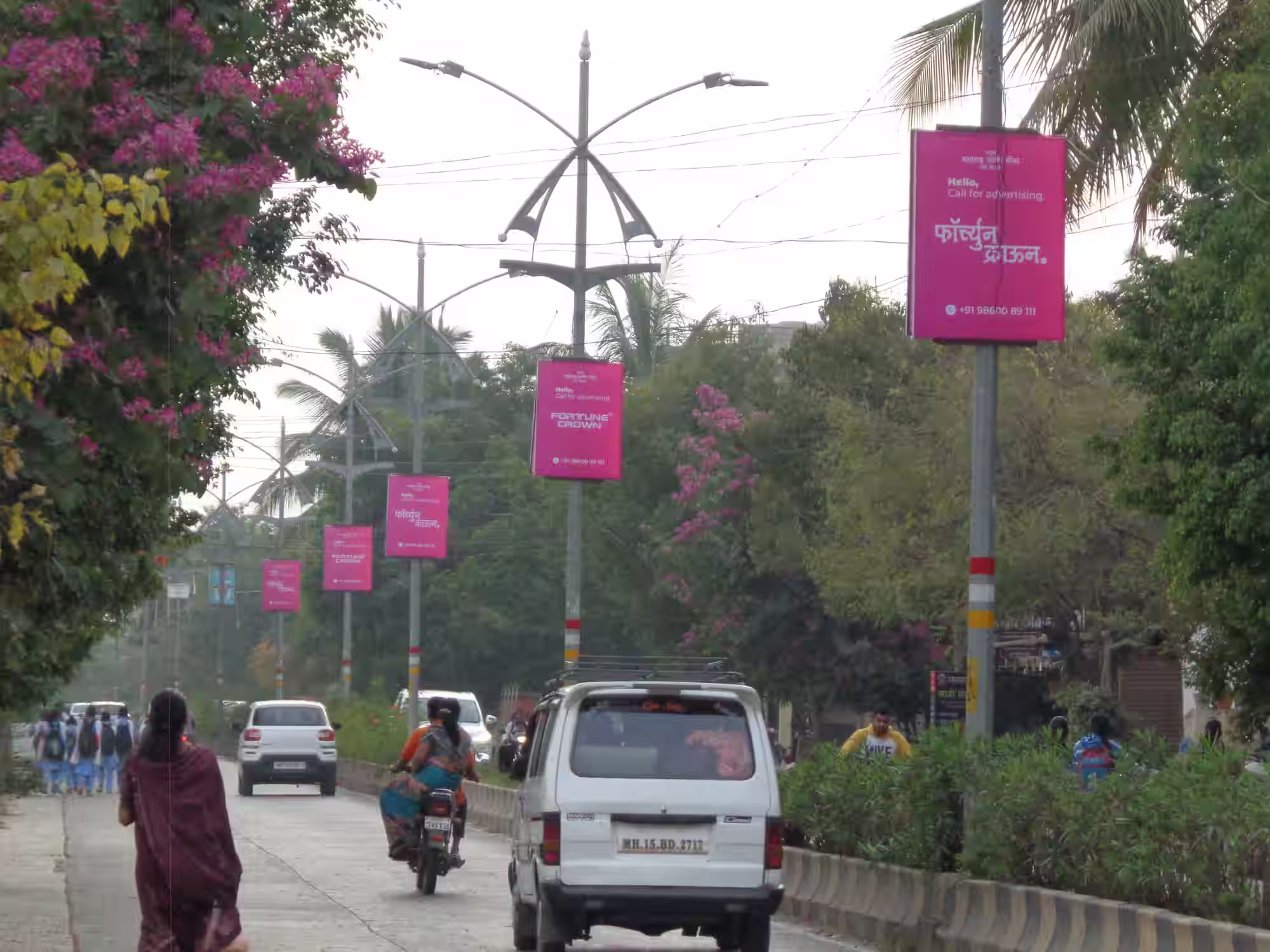
Understanding when and why people travel can help advertisers choose more appropriate locations.
A commercial road may experience significant movement during morning and evening commuting periods. A shopping street may become more active in the afternoon or evening, while certain markets may attract particularly high footfall on weekends and during festivals.
These patterns differ across cities and neighbourhoods, so advertisers should validate them locally rather than rely on a universal timetable.
For example, a campaign promoting office-oriented services may benefit from exposure along routes used by working professionals. A restaurant promoting an evening offer may prioritise nearby commercial and residential catchment areas. A festive retail campaign may focus on shopping destinations that attract customers during the relevant season.
The goal is to understand the relationship between audience movement and the advertised offer.
A well-planned Pole Kiosk Advertising Agency in India campaign considers the following factors:
The main audience travelling through the area.
The reason people visit or pass through the location.
Traffic and pedestrian patterns at different times.
The relevance of the product to the local audience.
The visibility and readability of the advertising creative.
The distance between the advertising location and the business being promoted.
The availability of approved advertising inventory.
This approach helps businesses make more informed decisions about where their outdoor advertising budget should be allocated. Pole Kiosk Advertising Agency in India.
How to Choose the Right Pole Kiosk Locations for Your Brand
Choosing locations should begin with the campaign objective, not simply with a list of available sites.
A company launching a new product may need broad visibility across several commercial areas. A neighbourhood retailer may benefit more from concentrated coverage around its store. A real estate company may want to reach audiences travelling through selected residential and commercial corridors.
Before finalising the media plan, advertisers should evaluate each proposed location against a consistent set of criteria.
Audience relevance: Does the location attract the people most likely to be interested in the product or service?
Visibility: Can the advertisement be seen clearly from the intended viewing direction? Are trees, parked vehicles, street furniture, or other structures likely to obstruct it?
Traffic conditions: Is there regular movement through the area, and are the viewing conditions suitable for the format?
Geographical coverage: Do the proposed locations collectively cover the intended neighbourhoods or commercial zones?
Campaign duration: Will the advertisement remain active long enough to support the campaign objective?
Media cost: Does the expected value of the location justify its rental and execution costs?
Permissions: Is the advertising structure approved for commercial use, and are the required permissions valid for the proposed campaign period?
Comparing locations against these factors makes it easier to develop a practical media plan rather than selecting sites based on traffic volume alone. Pole Kiosk Advertising Agency in India.
What Makes a Pole Kiosk Advertisement Effective?
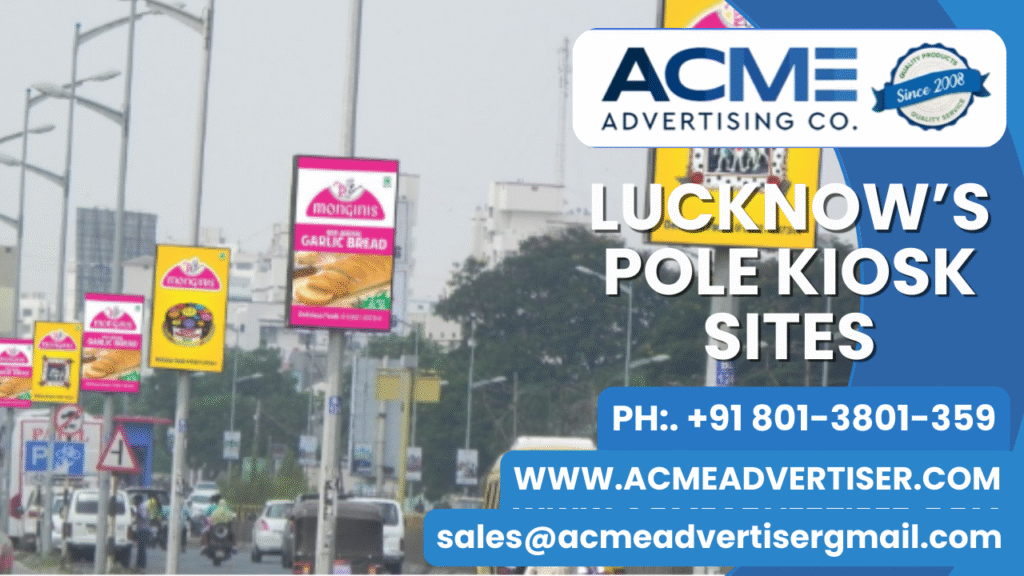
A pole kiosk advertisement usually has limited space and a short viewing window. Its creative design must communicate the main message quickly.
A complicated design with excessive text may reduce readability, particularly when people encounter it while travelling.
Effective creative development generally focuses on a few essential elements.
A clear headline: The primary message should be understandable at a glance.
Strong visual hierarchy: The headline, brand identity, product image, and supporting message should be arranged so that the most important information stands out.
Readable typography: Letter sizes and font styles should suit the viewing distance and dimensions of the advertising structure.
Brand consistency: Colours, logos, and visual elements should match the brand’s established identity.
A relevant call to action: Depending on the campaign, this may communicate a store opening, product launch, offer, or another specific next step.
Appropriate artwork: Images and graphics should remain clear and properly proportioned when printed at the final display size.
For example, a retailer announcing a new outlet might focus on the store name, its key offering, and its location. A consumer brand launching a product could prioritise the product visual and a short brand message.
The purpose is not to communicate every product detail. It is to create a memorable impression that supports the broader marketing campaign. Pole Kiosk Advertising Agency in India.
Pole Kiosk Advertising for Different Industries
Different industries can use pole kiosk advertising in different ways. The most suitable approach depends on the buying behaviour, geographical reach, and marketing priorities of the business.
Retail and fashion: Brands can use selected commercial streets and shopping areas to promote seasonal collections, store openings, and promotional events.
FMCG and consumer goods: Campaigns can focus on relevant neighbourhoods, shopping corridors, and busy commercial locations to support product recognition.
Real estate: Developers may consider approved placements along relevant residential and commercial routes to improve awareness of a project among potential buyers.
Education: Educational institutions and training providers may target suitable areas around student communities and relevant commercial hubs.
Automotive: Dealers and vehicle brands may use selected roads and commercial areas to support new launches, dealership awareness, and promotional campaigns.
Food and hospitality: Restaurants, cafes, hotels, and food brands can consider placements near suitable residential, commercial, and visitor destinations.
Financial and professional services: Businesses may use relevant commercial corridors to reinforce awareness of their services among local audiences.
Each category requires a different location strategy. A campaign that works for a neighbourhood retailer may not be suitable for a national consumer brand.
How ACME Advertising Co. Approaches Pole Kiosk Campaign Planning
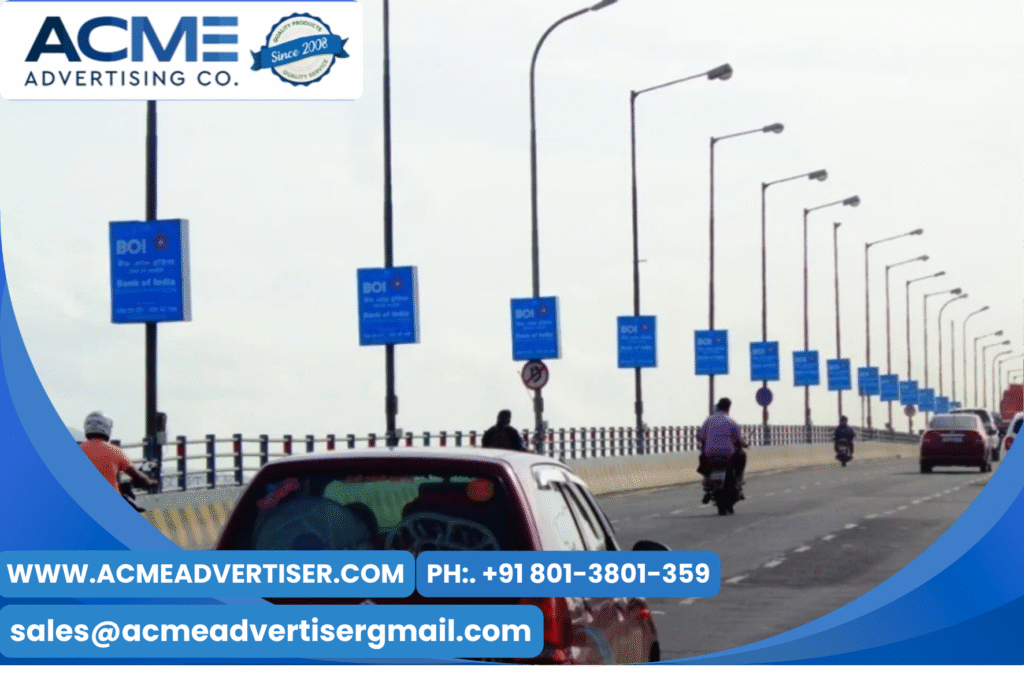
Planning an outdoor advertising campaign involves more than selecting an advertising format. Businesses must coordinate the media plan, artwork, production requirements, installation arrangements, and campaign execution.
ACME Advertising Co. works across outdoor media and retail branding requirements, helping businesses plan advertising activities according to their campaign objectives and geographical needs.
The process can include the following stages.
Understanding the campaign objective: The first step is to identify whether the business wants brand awareness, local store visibility, product promotion, or support for a wider marketing campaign.
Identifying the target audience: Audience characteristics and geographical priorities help narrow down suitable areas.
Evaluating media locations: Proposed sites should be assessed for relevance, visibility, availability, and applicable permissions.
Planning the creative: The advertising artwork should communicate the brand message clearly and suit the selected format.
Coordinating production and execution: Printing, material specifications, installation arrangements, and execution timelines should be aligned with the approved plan.
Reviewing campaign delivery: Installation confirmation, photographs where appropriate, and campaign records can help advertisers verify that the planned activity has been executed.
For businesses looking for a Pole Kiosk Advertising Agency in India, this coordinated approach can simplify campaign management, particularly when multiple locations are involved.
ACME Advertising Co. also provides other outdoor and retail branding services, allowing businesses to explore complementary advertising formats when their campaign objectives require broader coverage.
What Determines the Cost of Pole Kiosk Advertising in India?
There is no single price that applies to every pole kiosk advertising campaign. The overall cost depends on the locations selected, the number of kiosks, the campaign duration, the advertising format, production specifications, installation requirements, and applicable charges.
Premium commercial areas may have different rental rates from smaller local markets. A campaign involving several locations may also require a different budget structure from a campaign concentrated in one neighbourhood.
Advertisers should request a customised quotation based on their actual requirements.
A useful quotation should clarify:
The number of advertising locations.
The address or identification of each proposed site.
The rental period.
Printing and production charges.
Installation and removal costs, where applicable.
Taxes and other applicable charges.
Permission-related requirements and responsibilities.
The availability of installation photographs or execution reports.
The process for handling damaged or incorrectly installed advertising material.
Comparing quotations on the basis of these details helps businesses understand the full campaign cost rather than evaluating media rental in isolation.
It is also useful to separate the cost of securing advertising space from the cost of producing and executing the campaign. This makes budget planning and later performance evaluation more transparent.
Measuring ROI from Pole Kiosk Advertising
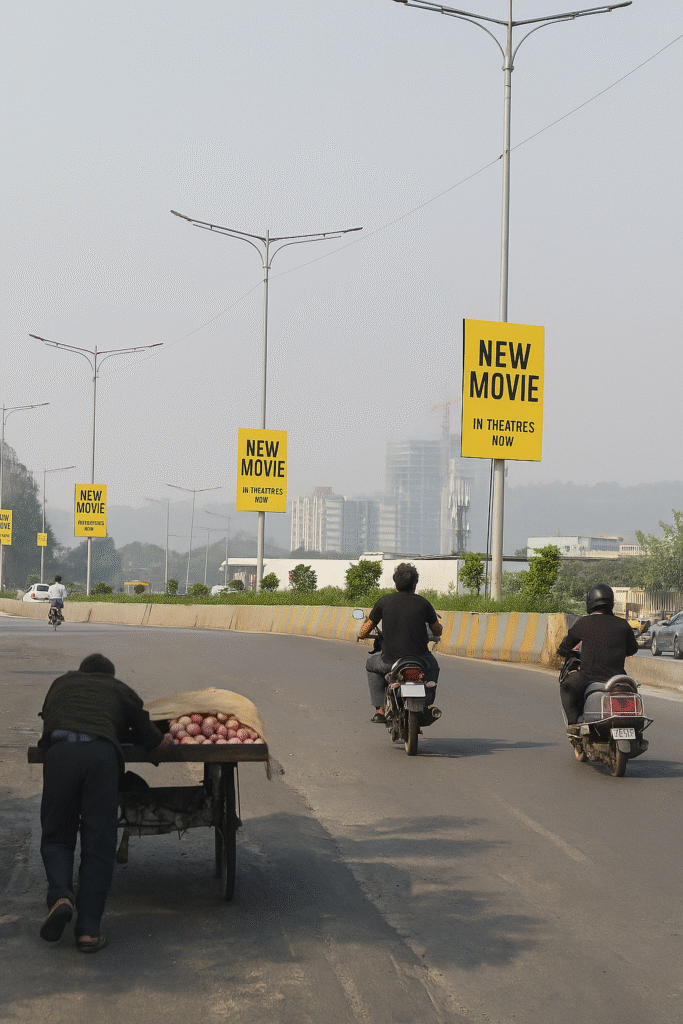
Return on investment is an important consideration for any business allocating money to outdoor advertising.
However, pole kiosk advertising does not always produce an immediate or directly measurable sale. Some campaigns are designed to improve brand recall, while others aim to increase store visits, enquiries, or product sales.
The measurement method should therefore reflect the original objective.
For campaigns focused on enquiries or sales, advertisers can track relevant leads, store visits, enquiries, or purchases and compare the results with campaign expenditure.
For brand-awareness campaigns, suitable indicators may include changes in brand recognition, search interest, website visits, and engagement during the campaign period. These indicators require careful interpretation because other marketing activities and market conditions can also influence results.
A simple financial ROI calculation is:
ROI (%) = [(Incremental Profit − Campaign Cost) ÷ Campaign Cost] × 100
For example, suppose a business spends ₹2,00,000 on a pole kiosk campaign. If the campaign generates an estimated ₹3,00,000 in additional profit that can reasonably be attributed to the activity, the calculation is:
ROI = [(₹3,00,000 − ₹2,00,000) ÷ ₹2,00,000] × 100
ROI = 50%
This example assumes that the ₹3,00,000 represents additional profit after accounting for the costs associated with the resulting sales. It is not total sales revenue.
In practice, attributing profit to outdoor advertising can be difficult. Businesses should compare results with a suitable baseline, account for other marketing activities where possible, and avoid assuming that every increase in sales came from the pole kiosk campaign.
Practical Ways to Improve ROI from Outdoor Advertising
A successful outdoor campaign requires more than high visibility. Advertisers should connect the media plan to a measurable business objective.
Start with a defined goal: Decide whether the campaign should increase awareness, generate enquiries, promote a new outlet, or support sales.
Prioritise relevant locations: Choose locations that match the target audience instead of selecting sites solely because they have high traffic.
Maintain a consistent message: Repeated exposure is more useful when the audience can recognise the same brand and understand its message.
Use a suitable campaign duration: Allow enough time for the campaign to achieve its objective, taking account of the product, audience, and market conditions.
Connect outdoor and digital activity: Where appropriate, monitor changes in branded searches, website traffic, enquiries, and other indicators during the campaign.
Compare performance across areas: If practical, compare locations or regions with different campaign exposure while accounting for other differences between them.
Document execution: Keep records of approved locations, campaign dates, installation evidence, and relevant costs.
Review the results: Use the findings to improve future decisions about locations, creative design, duration, and budget allocation.
These steps help businesses evaluate outdoor advertising as part of a broader marketing strategy instead of judging it only by impressions or the number of installed advertisements.
Common Mistakes to Avoid When Planning Pole Kiosk Advertising

Even a well-funded campaign can underperform if important planning decisions are overlooked.
One common mistake is choosing locations only because they appear busy. A crowded road may not provide much value if the people travelling through it are unlikely to be interested in the product.
Another mistake is placing too much information in the artwork. Pole kiosks need clear, concise communication that can be understood quickly.
Businesses may also underestimate the importance of execution quality. Poorly printed material, incorrect placement, obstructed displays, or inconsistent installation can weaken the overall campaign.
A further problem is failing to define success before the campaign begins. Without an objective and a suitable measurement method, it becomes difficult to understand whether the advertising investment delivered meaningful results.
Finally, advertisers should not assume that every roadside structure can be used commercially. Permissions, site availability, municipal rules, road safety requirements, and applicable advertising policies must be checked before execution.
Avoiding these mistakes helps businesses build campaigns that are better organised, more relevant to their audiences, and easier to evaluate.
Planning Your Next Pole Kiosk Advertising Campaign in India
Outdoor advertising can support businesses at different stages of growth, from introducing a new product to strengthening an established brand across selected markets.
The key is to match the advertising format with the audience, location, budget, and campaign objective.
For some businesses, a focused campaign around a local retail area may be the right starting point. Others may require a broader plan covering several commercial districts or cities. In both cases, careful location selection, effective creative development, transparent cost planning, and proper execution remain important.
ACME Advertising Co. supports outdoor advertising and retail branding requirements for businesses seeking to improve their visibility across India.
If you are evaluating pole kiosk advertising for your brand, begin by identifying your target cities, preferred locations, campaign duration, and primary marketing objective. These details can help establish a practical media plan and a more meaningful approach to measuring campaign performance.
How can a pole kiosk advertising campaign help businesses reach customers across India?

Pole kiosk advertising can help brands build visibility along busy roads, market streets, commercial areas, and selected urban routes. Since these advertisements are positioned on street poles, they can repeatedly expose a brand to pedestrians, commuters, shoppers, and people travelling through the area.
For businesses planning a local launch or a wider outdoor campaign, pole kiosks can help establish a visible presence across selected neighbourhoods. Retail stores may promote new outlets, real estate companies can highlight projects, and consumer brands can use them to reinforce brand recognition.
ACME Advertising Co. helps businesses plan outdoor advertising campaigns according to their target locations, audience, campaign objectives, and budget. The most suitable locations depend on available advertising inventory, permissions, and the expected movement of people through each area.
Which locations are suitable for pole kiosk advertising in India?
Busy market roads, shopping districts, business centres, major junctions, and selected roads connecting residential areas with commercial hubs may be suitable locations for pole kiosk advertising. The best choice depends on where the intended audience travels and spends time during the day.
For example, a retail brand may focus on shopping streets, while a real estate company may prefer routes connecting residential neighbourhoods with its project locations. An education provider could consider roads near student catchment areas, subject to local advertising permissions and available sites.
A location plan should consider traffic movement, visibility, viewing distance, lighting, competing advertisements, and the number of suitable sites available. Pole kiosks should only be installed or booked at approved locations, with the relevant permissions confirmed before the campaign begins.
What factors affect the cost of pole kiosk advertising in India?
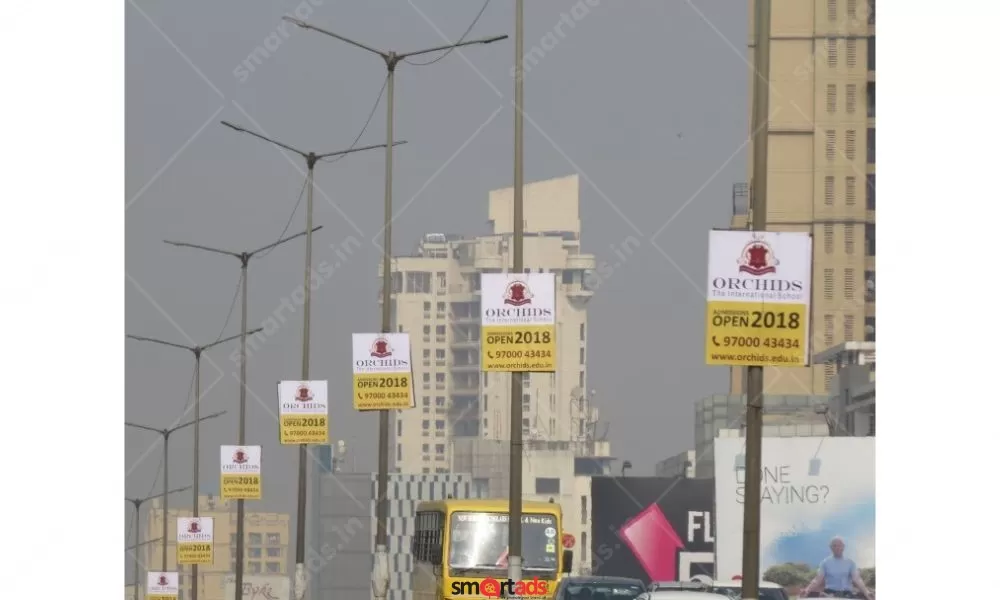
The cost of pole kiosk advertising depends on the city, selected roads, number of poles, campaign duration, display specifications, printing requirements, and installation charges. Premium commercial locations may have different rates from other approved areas, so costs should be assessed according to the actual media plan.
Campaign budgets may also include artwork adaptation, weather-resistant printing, mounting, maintenance, replacement of damaged displays, and applicable permission or licensing charges. Booking a series of poles along a selected route may require a different investment from advertising at a few individual locations.
To prepare a realistic estimate, businesses should share their preferred cities, target areas, approximate number of kiosks, campaign dates, and budget. ACME Advertising Co. can help assess suitable options and provide a quotation based on availability and the campaign’s requirements.
How can ACME Advertising Co. help plan and execute pole kiosk advertising campaigns?
ACME Advertising Co. supports outdoor advertising campaigns through location planning, printing, branding, installation coordination, and execution. With 18+ years of industry experience, the company helps businesses plan campaigns around their intended audience, geographical coverage, and promotional goals.
The process generally begins with understanding the campaign requirements, shortlisting suitable locations, checking media availability, and preparing a quotation. Once the sites and permissions are confirmed, the creative can be adapted to the selected format, printed, installed, and checked during the campaign period.
For a pole kiosk advertising campaign in India, businesses can contact ACME Advertising Co. at +91 8013-8013-59 or info@acmeadvertiser.com. Share your target city, preferred locations, campaign duration, and budget to discuss the available options. Local rules and permissions must be verified for the chosen sites before installation.
Frequently Asked Questions
1. How can businesses evaluate the ROI of a pole kiosk advertising campaign?
Businesses can evaluate ROI by comparing the campaign’s attributable incremental profit with its total cost. Depending on the objective, they can also monitor enquiries, store visits, sales, branded search activity, and changes in brand awareness. The measurement method should be selected before the campaign begins, and results should be interpreted carefully when other marketing activities are running simultaneously.
2. How much budget should a business allocate to pole kiosk advertising in India?
The required budget depends on the number of locations, site rental rates, campaign duration, printing specifications, installation costs, and the geographical coverage required. Businesses should first define their objectives and request a detailed quotation. Starting with a focused group of relevant locations can help them assess execution quality and available performance indicators before expanding the campaign.
3. Can pole kiosk advertising increase store visits and local sales?
Yes, pole kiosk advertising can support store visits and local sales when advertisements are positioned near relevant shopping areas, residential neighbourhoods, or routes used by potential customers. Results depend on the offer, creative quality, location relevance, and other factors influencing purchasing decisions. Businesses can assess performance using store-level sales data, enquiry records, promotional codes, or customer feedback where appropriate.
4. How long should a pole kiosk campaign run to deliver measurable results?
There is no universal duration that guarantees results. The appropriate period depends on the campaign objective, audience movement, product category, location, and frequency of exposure. A brand-awareness campaign may require sustained visibility, while a short promotional campaign may follow a specific launch or retail event. Advertisers should agree on the campaign period in advance and evaluate performance against realistic objectives.
5. Which locations should businesses prioritise for better advertising ROI?
Businesses should prioritise locations that reach their intended audience and support the campaign objective. These may include suitable commercial roads, shopping markets, office districts, residential connecting roads, and approved transport corridors. The best locations are not necessarily the busiest ones; their value depends on audience relevance, visibility, cost, and proximity to the intended market.
6. How can a business compare two pole kiosk advertising locations?
A business can compare locations using a consistent set of criteria, including audience relevance, traffic patterns, viewing conditions, campaign cost, geographical coverage, and availability of approved advertising space. If performance data is available, the business can also compare enquiries, store visits, or sales associated with each area. Using the same measurement approach makes future media planning more informed.
7. Does pole kiosk advertising work for small and medium-sized businesses?
Pole kiosk advertising can be suitable for small and medium-sized businesses when the campaign is planned around a realistic budget and a clearly defined geographical market. A business does not necessarily need a large citywide campaign. It may achieve a more relevant presence by focusing on selected locations near its store, service area, or target customer community.
8. What information should businesses provide when requesting a pole kiosk advertising quotation?
Businesses should share their target city or cities, preferred neighbourhoods, campaign objective, expected duration, approximate budget, target audience, and creative requirements. They should also mention whether they need printing, installation, campaign documentation, or other execution support. Providing these details helps an advertising agency assess suitable locations and prepare a more relevant quotation.
Website: www.acmeadvertiser.io
LinkedIn: ACME Advertising Co