

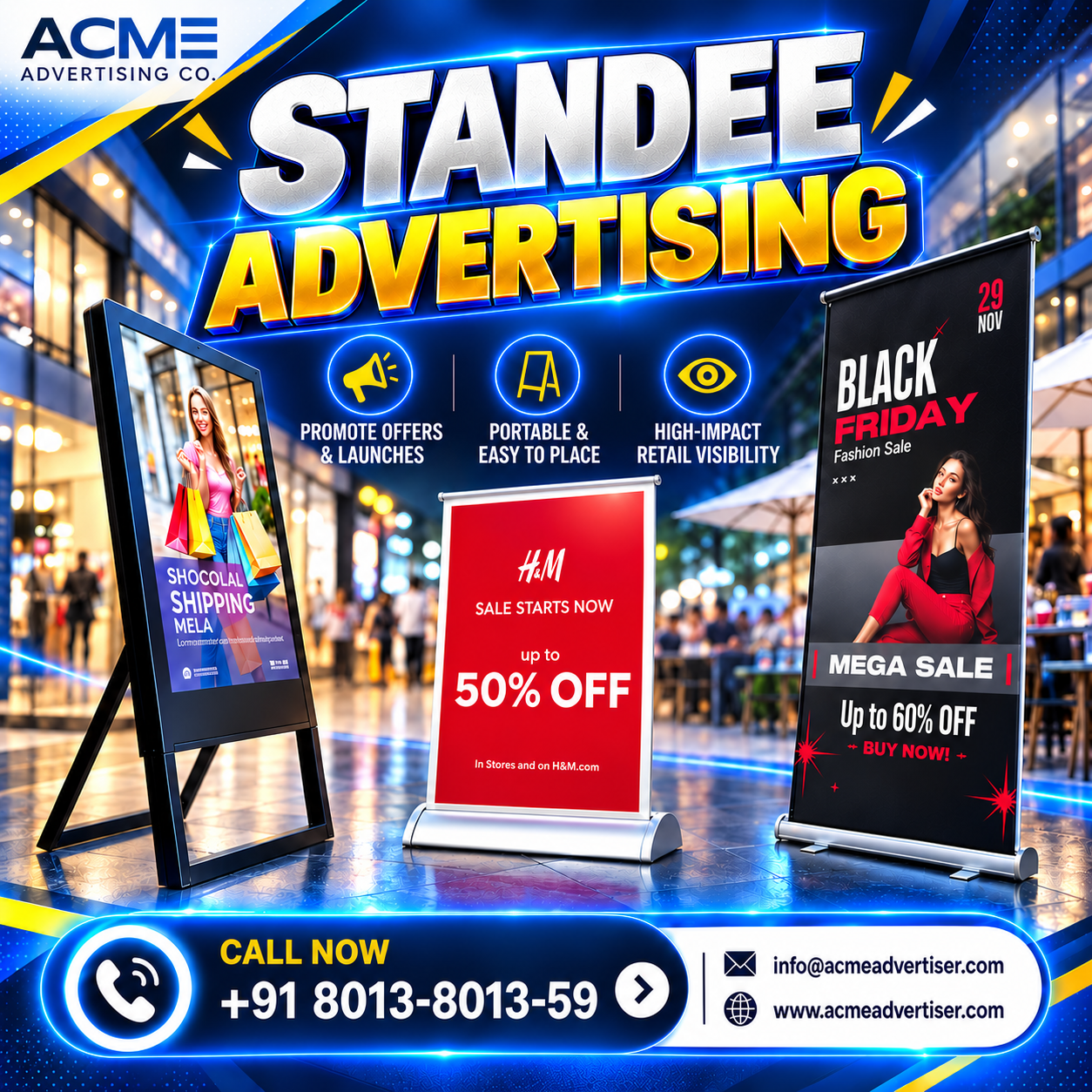
Modern businesses communicate with customers through websites, social media, email campaigns and physical environments. Although digital channels are useful for sharing information, many customer interactions still happen in stores, showrooms, offices, exhibitions and live promotional settings. In these spaces, a well-planned display can connect the brand message with the customer’s immediate surroundings.
Standee advertising for businesses offers a flexible way to introduce products, explain services, highlight a campaign or direct visitors towards a specific action. It can support a short promotional activation, a corporate event, a retail launch or a recurring in-store communication requirement.
The value of a standee comes from matching its format and message to the customer journey. A product display should help customers understand the product, while an event standee should make the next step—such as registration, attendance or visiting a demonstration area—clear.
Understanding Standee Advertising for Businesses: Physical Marketing Tool
A standee is a freestanding promotional display designed to present a message within a physical environment. Depending on the requirements, it can be a portable roll-up display, a printed stand, a shaped cutout or a customised structure.
Businesses can use standees as independent displays or as part of a broader campaign involving point-of-sale materials, event branding, retail graphics and digital communication. The physical display should reinforce the campaign’s main message rather than introduce unrelated information.
Before choosing a format, define the intended outcome. Is the standee meant to increase awareness of a product, communicate an offer, help visitors navigate a venue, or encourage enquiries? A clearly defined objective makes design and placement decisions easier.
How Standee Advertising Supports Different Stages of the Customer Journey
A standee can play a different role depending on where a customer encounters it. At an entrance, it may introduce a brand or promotion. Near a product, it can explain features or an offer. At a reception or registration desk, it may provide directions or instructions.
| Customer stage | Standee application | Example message |
|---|---|---|
| Discovery | Introduce the brand or product | “Discover Our New Collection” |
| Consideration | Explain features or service benefits | “Explore Available Options” |
| Purchase support | Highlight an offer or product detail | “Ask Our Team About This Offer” |
| Event participation | Guide visitors towards an activity | “Register Here” |
| Follow-up | Encourage an enquiry or further action | “Scan to Learn More” |
These examples should be adapted to the actual campaign and audience. A QR code can connect a physical display to a landing page or product information, but it should be tested before the standee is deployed.
Selecting a Standee Format for Modern Business Environments
The right standee depends on how the display will be transported, installed, viewed and stored. A portable format may be useful for teams attending multiple events, while a custom cutout may suit a product activation that needs a distinctive visual presentation.
| Display type | Potential use | Important considerations |
|---|---|---|
| Roll-up standee | Conferences, demonstrations and mobile event teams | Setup time, portability and storage |
| Tin standee | Product promotion and selected retail placements | Material finish and structural requirements |
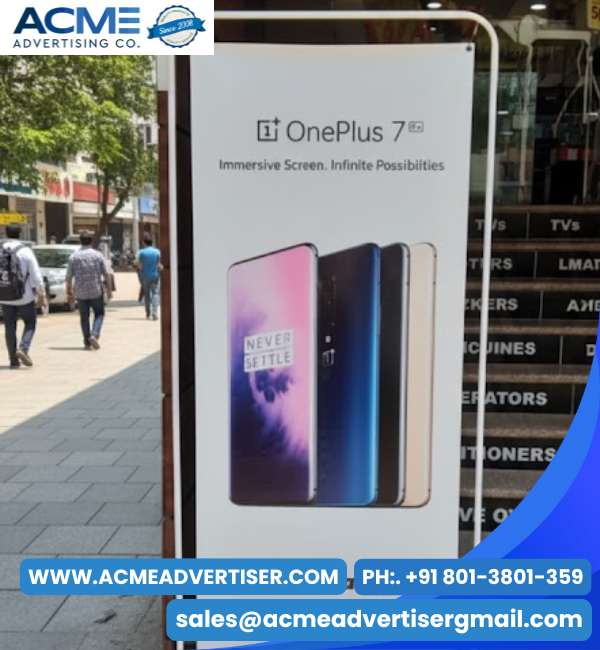
| Door-frame standee | Entrances and designated promotional zones | Clearance and visitor movement |
| Cutout standee | Product launches and experiential campaigns | Shape, visual balance and stability |
| Custom promotional display | Special campaigns and branded installations | Fabrication, transport and site suitability |
A modern-looking design does not automatically make a display effective. The message, physical dimensions, viewing distance and location all influence whether people can understand it easily.
Standee Advertising for Product Launches and Brand Activations
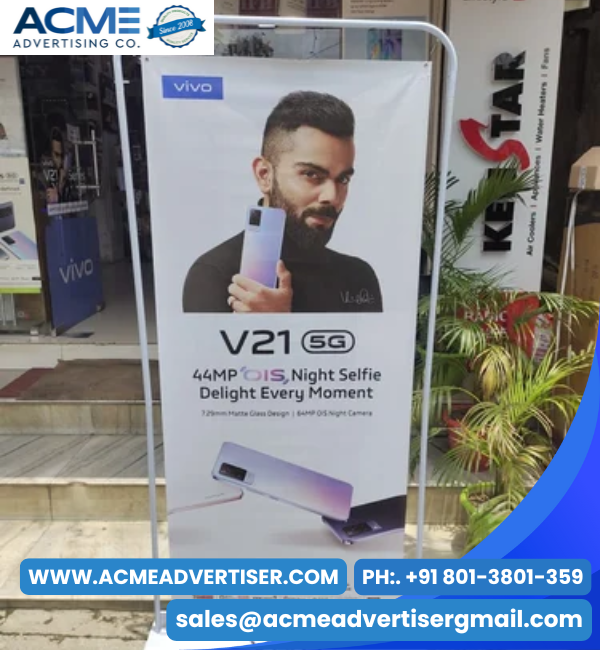
Product launches often involve several communication points, including invitation messages, event backdrops, product demonstrations and promotional counters. A standee can provide a clear introduction to the product while supporting the rest of the event branding.
For example, a technology business may use a display to introduce a new device and direct visitors to a demonstration. A consumer brand may highlight a product benefit near a sampling station. A service provider may use a standee to explain its offering and provide an enquiry link.
For a consistent campaign, align the standee with the launch’s main creative direction. The logo, typography, colour palette and central message should match other approved materials, while the standee itself should contain only the information necessary for its placement.
Standee Advertising for Retail, Office and Experience-Based Spaces
Physical environments have different communication requirements. Retail locations need displays that complement product browsing, offices may need professional brand or visitor information, and experience-based spaces may use displays to guide visitors through a planned activity.
| Environment | Suggested application | Design approach |
|---|---|---|
| Retail store | Product offers and category promotion | Clear headline and product imagery |
| Corporate office | Company introduction and visitor information | Professional and concise |
| Exhibition booth | Brand proposition and product overview | High visual contrast |
| Training or conference venue | Session information and directions | Easy-to-scan layout |
| Café or restaurant | Menu highlights and promotional items | Readable text and relevant imagery |
| Showroom | Product benefits and service enquiries | Clear information hierarchy |
Placement must always consider visitor flow, accessibility and venue restrictions. Businesses should not position displays where they obstruct walkways, emergency exits or essential signs.
Using QR Codes and Digital Links with Standee Campaigns
A physical standee can be connected to digital content through a QR code, short web address or other clear call to action. This can help customers reach a product page, event registration form, service catalogue or enquiry page without requiring the display to carry extensive text.
Before printing, confirm that the destination page works on mobile devices, the QR code scans at a practical distance and the link leads to the intended content. If the campaign is time-sensitive, make sure the page and offer remain available throughout the display period.
Businesses should also consider privacy and consent requirements if a linked form collects personal information. The display should explain the purpose of the form clearly and direct visitors to an appropriate, secure destination.
Designing Standee Creative for Clear Communication
The creative should help viewers understand the message quickly. A strong layout usually contains a primary headline, one relevant visual, a short supporting statement and a clear action.
For a consistent brand experience:
- Use approved logos, colours and typography.
- Keep the headline concise and specific.
- Select images that support the message rather than distract from it.
- Use readable text sizes for the expected viewing distance.
- Make QR codes and contact information easy to find.
- Check artwork dimensions, print resolution and bleed requirements with the production provider.
- Proofread every version before approving printing.
For campaigns running across multiple locations, maintain a master creative file and document which elements may be changed. This can help reduce inconsistencies when addresses, dates or campaign details vary by venue.
Measuring and Reviewing Standee Campaign Performance
A standee does not automatically provide measurable results, so businesses should define practical indicators before launching the campaign. The appropriate measure depends on what the display is expected to achieve.
| Campaign objective | Possible measurement method |
|---|---|
| Generate enquiries | Track enquiries associated with the campaign |
| Encourage digital visits | Use a dedicated landing page or campaign link |
| Promote an offer | Record offer redemptions where practical |
| Support an event | Compare registrations or interactions with the event plan |
| Improve store communication | Collect staff observations and customer feedback |
| Maintain brand consistency | Review display placement and artwork compliance |
Where QR codes or dedicated URLs are used, ensure that tracking is configured before printing. For other campaigns, a simple staff checklist or periodic placement review may be more appropriate than attempting to assign precise results without reliable data.
Standee Advertising Costs and Campaign Planning
The overall cost depends on the display format, dimensions, material, printing quantity, custom design or fabrication, transportation and installation requirements. A recurring campaign may also require storage and replacement planning.
A useful project brief should include the intended location, campaign dates, quantity, artwork status, display specifications and any venue rules. If the campaign involves multiple sites, include the distribution schedule and the process for confirming that each display has been placed correctly.
Businesses should request a quotation that clearly identifies the included production and service components. This makes it easier to compare proposals and understand whether design, delivery, assembly or installation is included.
Integrating Standee Advertising with Omnichannel Brand Campaigns
Standee advertising can complement digital marketing when both channels communicate a consistent message. For example, an online product campaign may direct people to a physical demonstration, while a standee at the venue can link visitors to additional specifications or an enquiry form.
The same approach can be applied to retail launches, exhibitions, corporate events and promotional activations. A campaign can use standees alongside promotional counters, cutout displays, in-store branding, event graphics and other point-of-sale materials.
The purpose of integration is not to place every marketing channel everywhere. It is to make each touchpoint useful and ensure that the transition between physical and digital communication feels natural.
Why Work with ACME Advertising Co. for Standee Branding?
ACME Advertising Co. lists a range of promotional display options, including roll-up standees, tin standees, door-frame standees and cutout stands. These formats can be considered for retail promotion, events, product launches and other brand communication requirements.
Businesses planning a standee campaign should share their creative objective, intended placement, quantity, preferred dimensions and delivery timeline. If the campaign includes multiple locations or custom structures, these details should be discussed before production so that the selected display suits the project.
Plan a Standee Advertising Campaign That Fits Your Business
Standee advertising works best when the message, design, display format and physical location are planned together. Whether the goal is to introduce a product, improve customer guidance or support a brand activation, a clear brief helps turn the display into a purposeful marketing touchpoint.
Contact ACME Advertising Co. to discuss your standee advertising requirements, explore suitable promotional display formats and request a customised quotation for your campaign.
How can I choose the right standee advertising format for my campaign?
The right standee advertising format depends on where it will be displayed, how long it will be used and what you want the audience to notice. Portable roll-up displays may suit conferences and business presentations, while other freestanding formats may be more appropriate for retail promotions, product launches, exhibitions and event entrances.
Before selecting a format, consider the available floor space, viewing distance, expected foot traffic and whether the standee will need to be transported between venues. Your creative should also be designed around the display dimensions, with a clear headline, recognisable branding and an easy-to-read call to action.
When requesting a proposal, share photographs or details of the intended display area, along with your quantity, budget and campaign dates. Ask the advertising team to confirm the recommended format, material specifications, production costs and any installation requirements before you approve the order.
Can standee advertising be customised for different products, audiences and locations?
Yes, standee advertising can be customised to communicate different products, services, offers and brand messages. A business may use separate creatives for different product categories, retail outlets, exhibition zones or customer groups while retaining consistent brand colours, logos and overall visual identity.
Customisation may involve changes to the printed artwork, dimensions, display structure, finishing or placement requirements. If each location requires a different QR code, contact number, offer or product image, prepare the final details for every version before approving production to avoid incorrect prints.
When requesting a customised quotation, specify which elements should remain consistent and which need to change. Confirm the cost of design revisions, prototype approvals, special fabrication and reprinting so you understand how creative variations may affect the project budget.
What artwork specifications should I confirm before standee production starts?
Before production begins, confirm the final standee dimensions, print area, file format, resolution, colour settings and any template requirements supplied by the printer. These specifications can vary according to the display structure and production method, so a file prepared for one format should not automatically be assumed suitable for another.
Your artwork should include the approved logo, campaign message, relevant product visuals and contact details, with sufficient space around important elements. Keep text readable at the expected viewing distance and check that QR codes, website addresses and other response details are accurate before the file is released for printing.
Request a final artwork proof and written production approval before manufacturing begins. Also confirm who is responsible for checking file quality, correcting errors and authorising any changes after approval, since late revisions may affect both cost and delivery timelines.
What additional charges should I check before approving a customised standee order?
The final cost of a customised standee order may include more than the printed graphic. Depending on the project, charges may apply for design development, special materials, structural fabrication, premium finishing, packaging, transportation, installation and dismantling. Multi-location distribution or urgent delivery may also require a separate estimate.
Ask the provider to identify the cost of each requested service and state which items are included in the base quotation. If you are ordering reusable displays, confirm whether replacement graphics can be printed separately and whether the existing stand structure can be used for future campaigns.
Before approval, check the applicable taxes, payment schedule, delivery conditions and charges for artwork changes or reprints. An itemised quotation makes it easier to compare proposals and helps ensure that the approved budget covers the complete execution requirement.
How can I arrange standee advertising for an upcoming event with a fixed deadline?
For an event with a fixed start date, share the venue, delivery address, number of standees, required dimensions and final artwork deadline as early as possible. Customised designs and large quantities may require additional preparation, while venues may impose specific delivery windows, access rules and installation instructions.
Ask the advertising provider to confirm the production schedule, artwork approval deadline, dispatch or delivery date and any setup arrangements in writing. If the standees need to be positioned at specific entrances, booths or presentation areas, provide a placement plan so the team can prepare accordingly.
Before confirming the order, establish what happens if the venue changes, artwork approval is delayed or delivery requirements are revised. After execution, request the agreed delivery or installation confirmation and check the completed displays against the approved artwork and quantity.
Frequently Asked Questions (FAQs):
1. How can my company order customized promotional standees for a marketing campaign?
Share your campaign objective, standee format, artwork, quantity, and delivery requirements with ACME Advertising to enquire about suitable options and receive a quotation.
2. What should I budget for branded standees at a corporate event or product launch?
Your budget will depend on the number of standees, display format, dimensions, printing materials, and production timeline. Request a tailored estimate based on your event requirements.
3. Can I order standees featuring QR codes and digital campaign information?
Yes, you can request designs incorporating QR codes, website links, product details, and calls to action. Supply the correct destination URL and verify the final artwork before approving production.
4. Which standee format is suitable for technology exhibitions and startup events?
Roll-up standees work well for portable presentations, while custom cutouts and larger display formats can suit product demonstrations and branded exhibition spaces. Choose based on your venue, message, and available space.
5. Can I get consistent standee designs for offices, exhibitions, and retail locations?
Yes, you can request a coordinated design system using consistent brand colours, logos, typography, and messaging. Share your brand guidelines and location-wise requirements when requesting a quotation.
6. Can standee advertising orders be customized for different audiences or campaigns?
Yes, you can request separate designs for product launches, recruitment events, trade shows, retail promotions, and customer acquisition campaigns. Confirm design and production costs for each variation.
7. What files and specifications are required before standee production begins?
Suppliers commonly request print-ready artwork, dimensions, images, logos, and colour specifications. Ask for the accepted file formats, resolution requirements, bleed settings, and proof-approval process before production.
8. How do I request a quote and approve a custom standee advertising order?
Submit your campaign details, quantities, dimensions, artwork, and delivery deadline to ACME Advertising. Review the design proof, itemised quotation, production schedule, and delivery terms before approving the order.
2/2
Website: www.acmeadvertiser.io
LinkedIn: Acme Advertising Co